
17. 吉澳天文台
Kat O Observatory
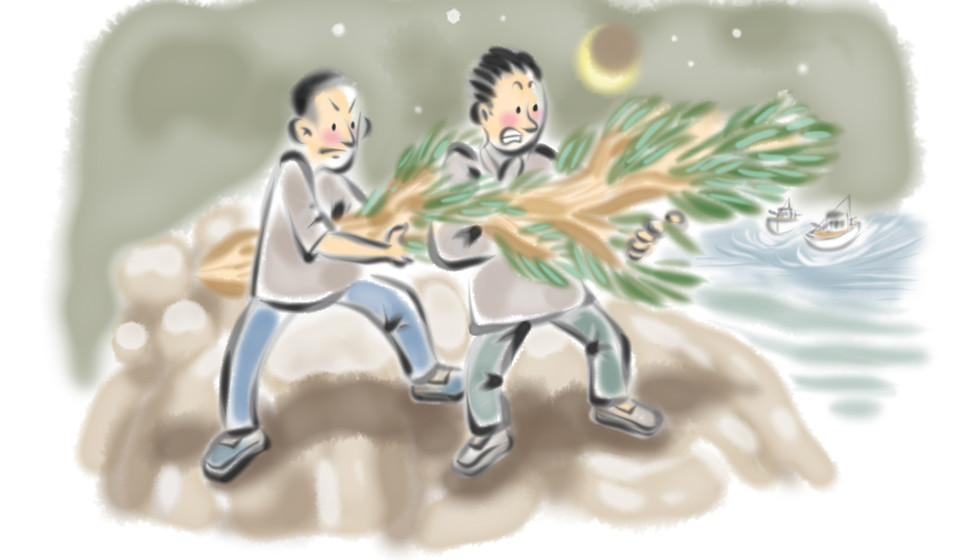
這裏講的天文台其實是指哨站,天文台的工作是預測夭氣,睇有冇雨落(睇水),因此香港人將負責睇水的哨站戲稱為天文台。上世紀六十年代之前。沿着吉澳大街,排列着四、五檔排九檔,另有天九、麻雀、十五湖等賭局。那年代的上一輩村民有不少吸食鴉片,全島合共有三家烟館。香港法例嚴禁聚賭和吸食鴉片,因此時不時有警察特遣部隊乘水警輪上岸捉人,為免警察成功拉人,因此有關行業便設立哨站預早示警。哨站設在吉澳公立學校對上叫「高棚頂」的山崗上,露天無遮無掩,由受薪的專人值班,工作時間大約早上十時至下午四時。,山頂有石,用乾松樹插在石縫豎起如旗桿,如見水警輪接近吉澳便放下松樹,拿着松樹揮舞,下面的人看見訊號便通知各人「散水」。哨站非常高效,以我所知,日間有人值勤時,警察從來沒有成功在島上拉人,但警察有两三次乘着夜色突襲,成功拘捕不少人。
據抗日文獻記載,吉澳哨站在抗戰時期已經發揮作用。如發現日軍的電扒(即機動小船)出動,哨站即放下山頂的松樹,指向日軍的方向,引導運輸小艇逃走,令危險性大減…….」 。
The “Observatory” here actually refers to a sentry post. The primary function of observatories is to predict the weather and monitor the sky for rain. So Hong Kong people jokingly called a sentry post responsible for police early warnings the Observatory.
Before the 1960s, Kat O was a remote, mountainous island, and among the three evils of gambling, drugs and prostitution, Kat O had two of them: gambling and drugs. Along Kat O Street, there were four or five rows of nine stalls, along with gambling centres, such as Tin Kau, Mahjong and Sap Ng Wu. Many older villagers were opium smokers, and there were three opium dens on the island. Gambling and opium smoking were strictly prohibited under the laws of Hong Kong, so from time to time, police task forces would arrive on police launches to apprehend offenders. To thwart the efforts of the police, the businesses involved set up sentry posts to give early warnings. One post was located on a hill called Ko Keng Teng above Kat O Public School. The open-air post had no cover and was manned by salaried staff from about 10 a.m. to 4 p.m. At the top of the hill, there was a rocky outcrop. Dried pine trees were stuck in the crevices of the rock and erected like flag poles. When the marine police launches approached Kat O, they would wave the pine trees to warn the people below to notify the opium smokers to stop.
As far as I know, the police never managed to catch anyone breaking the law during the day, when the observation station was manned. By the time the police launches were near the shore, the gamblers had already dispersed, the opium shops had closed down, and the workers had gone into hiding. After 4 p.m. and at night, no one was responsible for the early warning. But after nightfall, there were even more gamblers on the island. The police made two or three raids at night and succeeded in arresting quite a number of people.
The Kat O outpost played a role during the Sino-Japanese war. Owing to its geographical location, Kat O was a transit point for guerrillas and supplies to Dai Siu Mui Sha and Sha Yue Chung on the mainland. In the article “Stories about the Hong Kong and Kowloon Independent Battalion of the East River Column”, which includes an interview with guerrilla member Lo Au Fung, Lo recounts, “One night in 1942, I had to liaise with some people at Dai Siu Mui Sha. There was a sentry post on a hill on Kat O, which was manned day and night. If a Japanese boat was spotted, the sentry post would pull down a pine tree on the hilltop and point it in the direction of the Japanese boat. This would guide the transport dinghy to change course, greatly reducing the danger for the guerrillas.

