
16.木屐
Clogs
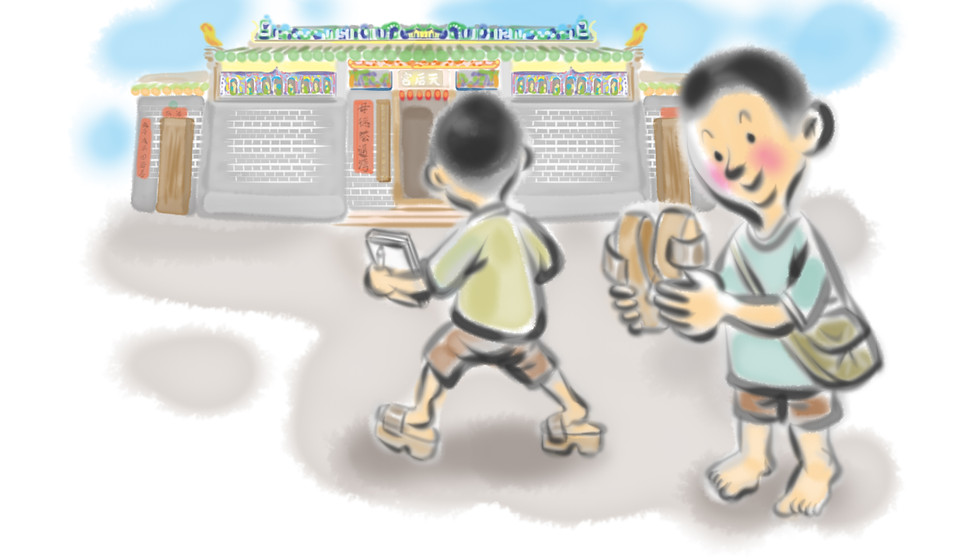
香港人有句俗語「冇鞋挽屐走」,意思是:情况危急,沒鞋子的話,有木屐就拿着逃。上世紀大約1955之前,吉澳人日常大多赤腳。那時生活困難,不要說買鞋子,買對木屐已經不容易了,因此要省着穿,重要場合才穿上。家父對我曾經講述,他上學時,學校規定不能赤脚,不得已為了上學買了一對木屐,每天由家裏步行到天后宮的學校時,把屐拿在手裏不捨得穿,到校門才穿上,這段路也只不過一两分鐘,以前的人節儉程度,今天的人簡直無法想象。不論男女老幼平常都赤腳,女人下田工作也是赤腳,但上山割草要着草鞋以防草頭刺足,特別是割過的「簕箕草」草頭,又尖又硬,如不着草鞋很容易剌穿腳底受傷。客家人的草鞋只算得上是拖鞋,只能保護腳底。
我小時見過西澳有個男人,一年四季平常日子都着屐,不知道的人一定以為是因為他富有,我可以告訴你不是這個原因。原因是他有着不完的屐,屐全部是他自己造的,我見過他用松樹造屐。此公便是西澳唐屋的「紅毛番」,大名不知。今天香港的街市相信還可看見賣魚佬穿木屐。
There is a common saying in Hong Kong that if you have no shoes and only clogs, you should take your clogs and run away. Before 1955, most of the people on Kat O went barefoot. At that time, life was difficult, and it was not easy to buy shoes or clogs, so they had to save them and wear them only on important occasions. My father once told me that when he went to school, the school rule was that he could not go to school barefoot, so he had no choice but to buy a pair of wooden clogs for school. Every day, when he walked from home to the Tin Hau Temple school, he carried his clogs and put them on only when he got to the door of the school, which was only a couple of minutes' walk. This is a level of thriftiness that is unimaginable to people today. Men, women and children usually went barefoot. The women went barefoot even when they worked in the fields. When they went up to the mountains to cut grass, however, they wore straw shoes to prevent the grass from piercing their feet, especially cuscus grass, which was very sharp and hard. If they didn't wear straw shoes, the grass would easily pierce the soles of their feet, causing injuries. The grass shoes of the Hakka people were simple slippers, which protected only the soles of their feet.
When I was a child, I knew a man from Tong Uk in Sai O who wore clogs every day. Those who didn't know him must have thought that he was rich, but in fact, he had an endless supply of clogs, since he made them himself. Even today, some fishmongers in the markets of Hong Kong wear wooden clogs.

